
Technical Requirements for Electrostatic Protection in the Manufacturing Process of Electronic Products
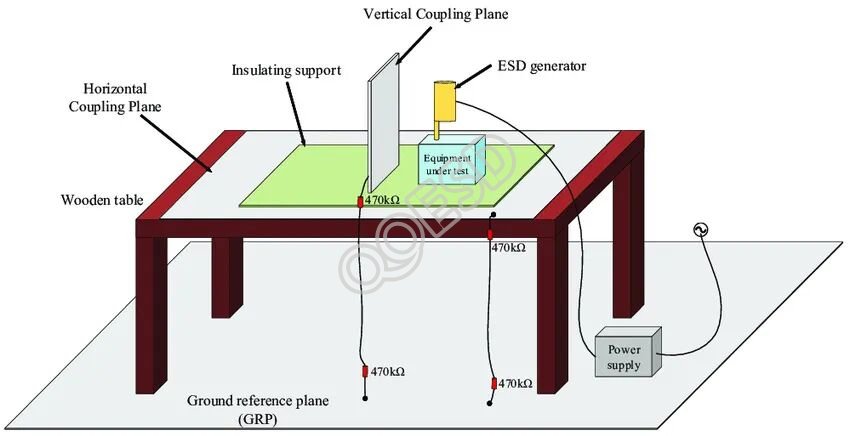
Environmental Technical Requirements:
1. Anti-static work areas must be kept clean, with no accumulation or suspension of dust.
2. Temperature and humidity within the workshop must be maintained within specified ranges.
3. Provided there is no adverse effect on the products, humidification equipment—using water or specialized solutions—may be employed to increase ambient humidity.
Technical Requirements for Anti-static Work Areas:
Class I Area Requirements:
1. Anti-static work areas must be clearly marked with defined boundaries and warning signs.
2. Anti-static flooring (or anti-static floor mats laid over standard flooring) must be used and effectively grounded. The use of bare wooden floors, carpets made of wool, linen, or synthetic fibers, and standard vinyl flooring is prohibited.
3. Ceilings and walls should ideally be constructed from anti-static materials. Gypsum-based products or lime-based coatings are generally acceptable; however, the use of standard plastic materials is prohibited.
4. An independent and reliable grounding system must be provided. The grounding resistance should generally be less than 10Ω. To ensure personnel safety, a 10鈦�Ω current-limiting resistor must be installed. Grounding must meet the following criteria:
- ESD grounding lines must not be connected directly to the power supply neutral (zero) line.
- ESD grounding lines must not be shared with lightning protection grounding systems.
- In a three-phase, five-wire power supply system, the protective earth (PE) line may serve as an ESD ground, provided that the power supply earth line and the neutral line are not connected to each other.
- ESD grounding lines must not be connected directly to machine chassis/enclosures; if a chassis is used for mounting, the ESD line must be electrically insulated from it.
- The main grounding bus must consist of a copper conductor with a cross-sectional area of 鈥嬧�媋t least 100mm².
- Branch grounding lines must consist of copper conductors with a cross-sectional area of 鈥嬧�媋t least 6mm².
- Grounding lines for equipment and workstations must consist of multi-strand, plastic-insulated copper conductors with a cross-sectional area of 鈥嬧�媋t least 1.25mm².
5. The following equipment is required for essential ESD protection:
- Anti-static workstations.
- Anti-static wrist straps. - Anti-static containers (component trays, bins, transport carts).
- Anti-static work garments.
- Anti-static footwear.
- Anti-static headwear.
- Anti-static soldering irons (if soldering is required).
- Ionizing air blowers.
Requirements for Class II Areas:
1. Anti-static work areas must be clearly marked with defined boundaries and warning signs.
2. Self-leveling flooring is generally permitted; the use of wooden flooring, carpets (made of wool, linen, or synthetic fibers), or standard vinyl/linoleum flooring is prohibited.
3. An independent and reliable grounding system must be provided. The grounding resistance should generally be less than 10Ω; to ensure personnel safety, a 10鈦�Ω current-limiting resistor must be installed. Grounding must meet the following requirements:
- ESD grounding lines must not be connected directly to the power supply neutral (zero) line.
- ESD grounding lines must not be shared with lightning protection grounding systems.
- In a three-phase, five-wire power supply system, the protective earth (PE) line may serve as the ESD ground, provided that the protective earth line and the neutral line are not connected to each other.
- ESD grounding lines must not be connected directly to machine chassis/enclosures; if a chassis is used for mounting, the ESD line must be electrically insulated from the chassis.
- The main grounding bus must be a copper conductor with a cross-sectional area of 鈥嬧�媋t least 100mm².
- Branch grounding lines must be copper conductors with a cross-sectional area of 鈥嬧�媋t least 6mm².
- Grounding wires for equipment and workstations must be multi-strand, plastic-insulated copper conductors with a cross-sectional area of 鈥嬧�媋t least 1.25mm².
4. The following equipment is required for necessary ESD protection:
- Anti-static workstations (for specialized tasks).
- Anti-static wrist straps.
- Anti-static containers (electronic component trays, PCB boxes).