
Blog
 I. Principles of Electrostatic Protection 1. Prevent the accumulation of static electricity in areas where it is likely to be generated, keeping it within a safe range. 2. Rapidly eliminate and discharge any static electricity that has already accumu
 In an SMT (Surface Mount Technology) production environment, ESD (Electrostatic Discharge) is strictly controlled. During onboarding, personnel are trained on ESDa term everyone in the industry knowsand are well aware that effective ESD management is
- Part 1 of an overview on Electrostatic Discharge (ESD) management in chip and electronics manufacturing environments. Effective ESD management in these settings requires a control system built upon three pillars: an equipotential grounding foundation
- 1. Static Electricity and Its Hazards Static electricity is a form of electrical energy that resides on the surface of an object. It arises from an imbalance of positive and negative charges within a localized area, resulting from the transfer of ele
 1. Q: Why do some ESD ground wires have impedance while others do not? A: The purpose of an ESD ground wire is to connect a conductive surface to a point that is at the same potential as the power ground. A hard ground uses a wire with no additional
 I. Where Does Static Electricity Come From? 3 Major Sources in Electronics Manufacturing At its core, static electricity arises when different materials come into contact, undergo friction, and then separatecausing electric charges to transfer, accum
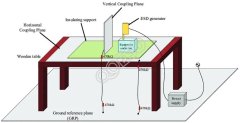 Environmental Technical Requirements: 1. Anti-static work areas must be kept clean, with no accumulation or suspension of dust. 2. Temperature and humidity within the workshop must be maintained within specified ranges. 3. Provided there is no advers
- 1(current)